By Kimberley Graham
The majority of Swiss citizens voted against weakening legal protections for wolves. Yet, the Swiss government has amended hunting laws to allow the killing of up to 70% of wolves.
In 2020, the majority of Swiss citizens voted against weakening national protections for wolves. Despite this result, the Swiss Parliament amended the hunting and protection of wild mammals and birds ordinance, without a proper consultation procedure, to allow each canton to set wolf kill quotas. Cantons with one wolf pack may kill “up to half of the young wolves born” annually and, where there are several packs, “up to two thirds of young wolves” in each pack. The Federal Office for the Environment approves wolf kill quotas submitted by canton’s until 31 January 2025.
The first wolf cull began on 1 December 2023 and continued through 31 January 2024. At least one wolf has been killed in the cantons of St. Gallen (which planned to cull the entire Calfeisental pack), and in Ticino (where five of the canton’s juvenile wolves born in 2023 were planned to be shot from three packs).
The canton of Valais shot 17 wolves in 18 days – half of their kill-quota of 34 wolves from seven packs. In the canton of Grisons eight wolves were shot out of the 44 authorised. However, following an appeal from environmental groups a suspensory effect came into force, saving three packs in Valais (Les Hauts-Forts, Nanz, and Le Fou-Isérables packs) and the remaining wolf kill quota in the canton of Grisons. The Federal Office of the Environment and the canton’s of Grisons and Valais applied for the suspensory effect to be lifted. The Federal Administrative Court found in the canton of Grisons the wolf packs concerned did not rely on livestock for survival, and in Valais the feared large number of livestock deaths could be prevented by alternative means. As the elimination of these wolves would be irreversible, the application was rejected. Therefore, the suspensory effect remains in place until the appeal from environmental groups is decided.
In an open letter, environmental and animal rights organizations condemned the killing of wolves in Switzerland on ecological, social, and legal grounds.
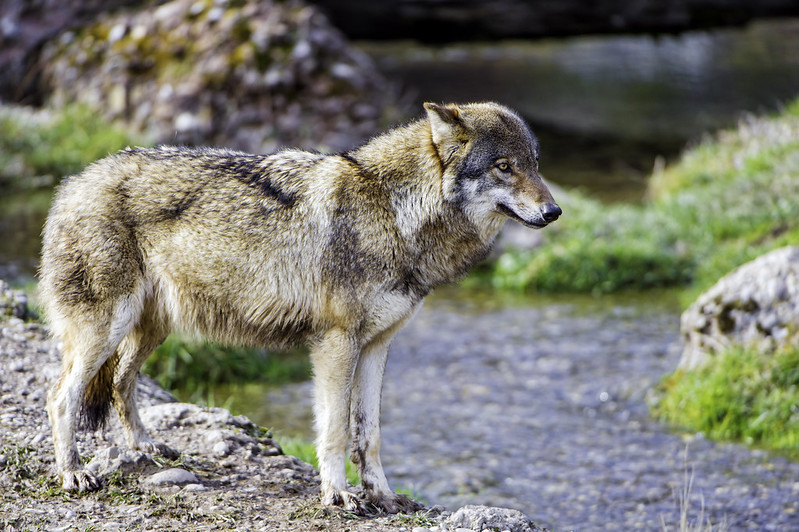
Ecological concerns include that wolves are a native and endangered species to Switzerland, which is still in recovery after being exterminated in 1872. Wolves returned to Switzerland from Italy in the 1990s. These wolves form part of the larger Western-Central Alps population, which from an ecological standpoint is considered a single population. Wolves often travel long distances, and the Alpine population, spanning across seven countries, is fragile. Prior to the winter cull, Switzerland had an estimated 32 packs, nine of these are transboundary packs straddling the border with Italy or France. The canton kill-quotas would reduce the number of wolf packs below the 17 packs needed to ensure a “minimum viable”sub-population of Swiss wolves, while further diminishing the larger Alpine population.
Hunting and farming groups are vocal when it comes to advocating for reducing wolves’ legal protections. These groups point to livestock fatalities and say wolves show dangerous behavior toward humans. However, in Switzerland during the summer grazing season, fatalities of sheep from carnivores (the majority are wolves) account for only 6% of total deaths. Further, no incident of wolves harming humans has been recorded during the last 40 years in Switzerland. Recent research also indicates that the views of farmers and hunters do not necessarily represent the views of rural communities living near wolves. An independent study commissioned by Eurogroup for Animals found that the majority of rural inhabitants across ten European countries want stricter protections for carnivores, including wolves, lynxes, and bears. In addition, under existing Swiss law, farmers can kill a wolf if it is a proven threat to livestock. A Swiss study, which investigated the deaths of 128 wolves in 25 year, found that 58% of wolf deaths were due to illegal poaching or traffic collision, with the remaining 42% legally shot.
In terms of regional legal protections, wolves are listed under Appendix II of the Convention on the Conservation of Wildlife and Natural Habitats (also known as the Bern Convention), which Switzerland ratified in 1981. This means that wolves should not be harmed or killed, and any exception to this “strictly protected” status must not be detrimental to the survival of the population. Switzerland is also a signatory to the Alpine Convention which requires parties to carefully consider the interests of all other Alpine States; intensify trans-border cooperation; and protect and preserve nature, animals, and their habitats.
Beyond Switzerland, legal protections for wolves are being challenged within the European Union (EU). The European Commission recently said it will table a proposal to downgrade the status of wolves under the Bern Convention from “strictly protected” to “protected”. For this proposal to move forward, it would require a majority (55%) vote from EU member States and, further, be voted on by the 50 members of the Bern Convention. Wolves are also “strictly protected” under the Habitats Directive – the EU’s implementing legislation of the Bern Convention. Any changes to protections for wolves under the Habitats Directive would require unanimity by all 27 member States.
Large carnivores, including wolves, were on the agenda at the Council of the European Union’s Agriculture and Fisheries Council meeting of 23 January 2024. The Finnish delegation, supported by Austrian, Czech, Greek, Italian, Latvian, Romanian, Slovak and Swedish delegations put forward their position — that wolf populations in Europe no longer require ‘strict conservation measures.’ A letter with the conclusions of the debate will be sent to the Environment Council.
Nearly 300 environment, animal, and nature conservation organizations recently addressed an open letter to President von der Leyen of the European Commission. They demand that any changes to legal protections for wolves under the Bern Convention, or under EU Law, be based on reliable scientific data, which is transparent and consider all community views on the matter, including the views of those who want a future of respectful co-existence with wolves.
 Environmental Rights Review
Leave a comment